Coral Reef Ecosystem, Tropical Ocean Waters
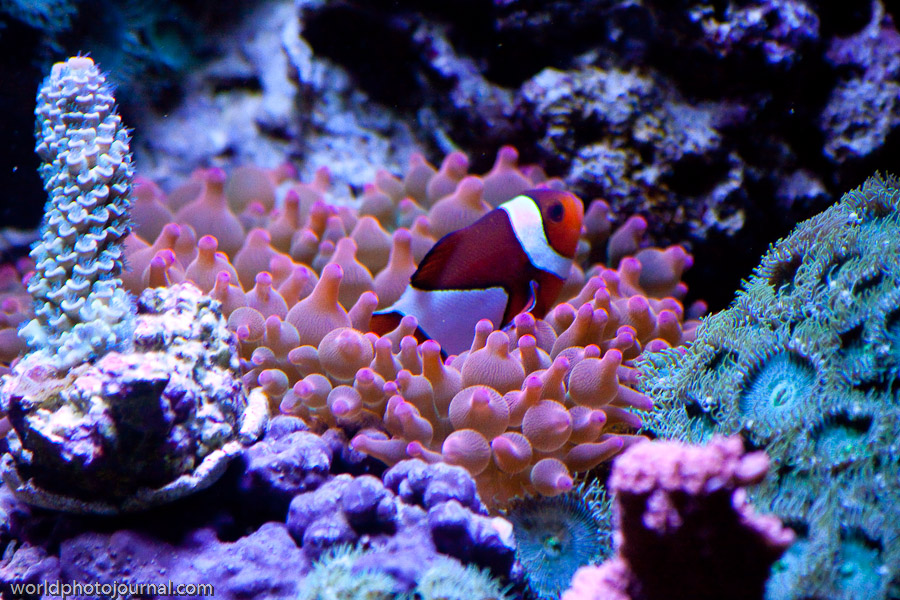
Coral reefs represent some of Earth’s most spectacular and biodiverse ecosystems, teeming with colorful fish, intricate coral formations, and fascinating symbiotic relationships. This underwater realm showcases the delicate balance of marine life, where iconic clownfish nestle safely within the tentacles of host anemones—particularly the Red and Black Tree Anemone (RBTA). These living gardens of the sea are found in tropical and subtropical waters around the globe, creating a mesmerizing landscape of blues, purples, and vibrant corals that captivates divers and snorkelers alike. The interplay of light filtering through the water illuminates countless species in their natural habitat, offering an unforgettable glimpse into one of nature’s most remarkable environments.
Highlights
- Clownfish and anemone symbiosis—a remarkable example of marine mutualism
- Stunning biodiversity with hundreds of coral species and thousands of fish varieties
- Vibrant colors enhanced by natural reef lighting and bioluminescence
- Complex coral structures providing shelter and breeding grounds for marine life
- Critical ecosystem supporting global marine food webs
What to Do
- Scuba dive or snorkel to observe clownfish in their natural anemone homes
- Photograph the intricate details of coral formations and colorful reef inhabitants
- Learn about coral conservation and the impacts of climate change on reefs
- Explore different reef zones from shallow lagoons to deep drop-offs
- Participate in reef restoration and monitoring programs
Best Time to Visit
Dry season months (typically November to April in Northern Hemisphere reefs) offer the calmest waters, best visibility, and most comfortable diving conditions.
Getting There
Access to coral reefs varies by location. Popular reef destinations include the Great Barrier Reef (Australia), Maldives, Caribbean islands, Southeast Asia, and the Red Sea. Most are reached via boat tours, liveaboard diving vessels, or shore-based diving operations.
Visitor Tips
- Wear reef-safe sunscreen to protect coral ecosystems from harmful chemicals
- Maintain proper buoyancy control to avoid damaging coral during diving or snorkeling
- Never touch or stand on coral—it damages polyps and interrupts their feeding
- Book with certified operators who follow sustainable tourism practices
- Respect wildlife and maintain a safe distance from all marine creatures
Nearby
- Tropical island destinations and beach resorts near major reef systems
- Marine research centers and aquariums dedicated to reef education
- Coastal villages offering authentic local culture and cuisine
- Secondary reef sites and alternative diving locations within the same region
Coral reefs are living treasures that demand our admiration and protection. Whether you’re an experienced diver or a curious snorkeler, witnessing the vibrant interaction between clownfish and their host anemones in a thriving reef ecosystem is an experience that will forever deepen your appreciation for the ocean’s wonders. Visit these magical underwater worlds responsibly and become an advocate for reef conservation.
Location Map
Coral Reef Ecosystem, Tropical Ocean Waters Read More »